
JAYAPURA – The government has reaffirmed its strong commitment to eradicating the smuggling of protected wildlife, which continues to occur in Papua. Throughout 2025, Jayapura Port has been recorded as the location with the highest number of enforcement actions against illegal shipments of wildlife and other high-risk commodities leaving the Papua region.
The Papua Center for Animal, Fish, and Plant Quarantine (BBKHIT Papua) recorded 225 quarantine enforcement actions during 2025. These measures included detention, rejection, and destruction of commodities that violated quarantine regulations and posed threats to biodiversity conservation.
The Head of BBKHIT Papua, through the Head of the Working Team, Drh. Nyoman Alit, emphasized that these firm actions reflect the government’s tangible presence in protecting wildlife while also safeguarding national food security.
“Throughout 2025, BBKHIT Papua has carried out 225 quarantine actions in the form of detention, rejection, and destruction of high-risk commodities. This demonstrates the government’s firm commitment to preserving Papua’s biodiversity,” Nyoman Alit stated.
Various protected wildlife species and other animals were successfully secured during these operations, including Birds of Paradise, several species of Lorikeets, sparrows, chickens, ducks, cats, and kangaroos. Among all findings, sparrows were the most frequently smuggled, totaling 135 birds, followed by Stella’s Lorikeets with 39 birds, 13 cats, and 11 chickens.
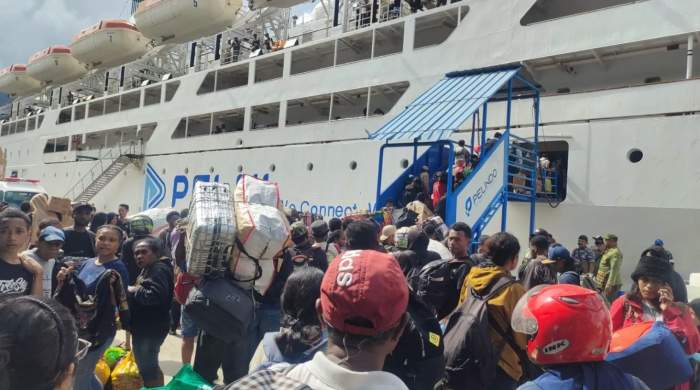
Most enforcement actions took place at Jayapura Port, accounting for 220 cases, while five additional cases were recorded at the ports of Biak and Serui. This confirms that maritime routes remain the primary targets for wildlife smuggling syndicates.
Nyoman Alit further explained that during 2025, BBKHIT Papua conducted 18 detentions, one rejection, seven destructions, and nine official handovers of protected wildlife carriers to relevant authorities.
According to him, upstream prevention remains the government’s primary strategy to avert large-scale economic losses and reduce the risk of disease outbreaks that could have widespread impacts.
“Prevention is far more important than responding after an outbreak has already spread. That is why we have intensified supervision at Papua’s entry and exit points,” he added.
The government has stressed that it will provide no tolerance for wildlife smuggling. Firm enforcement will continue as part of the state’s responsibility to protect Papua’s natural heritage and uphold fair and decisive law enforcement.
